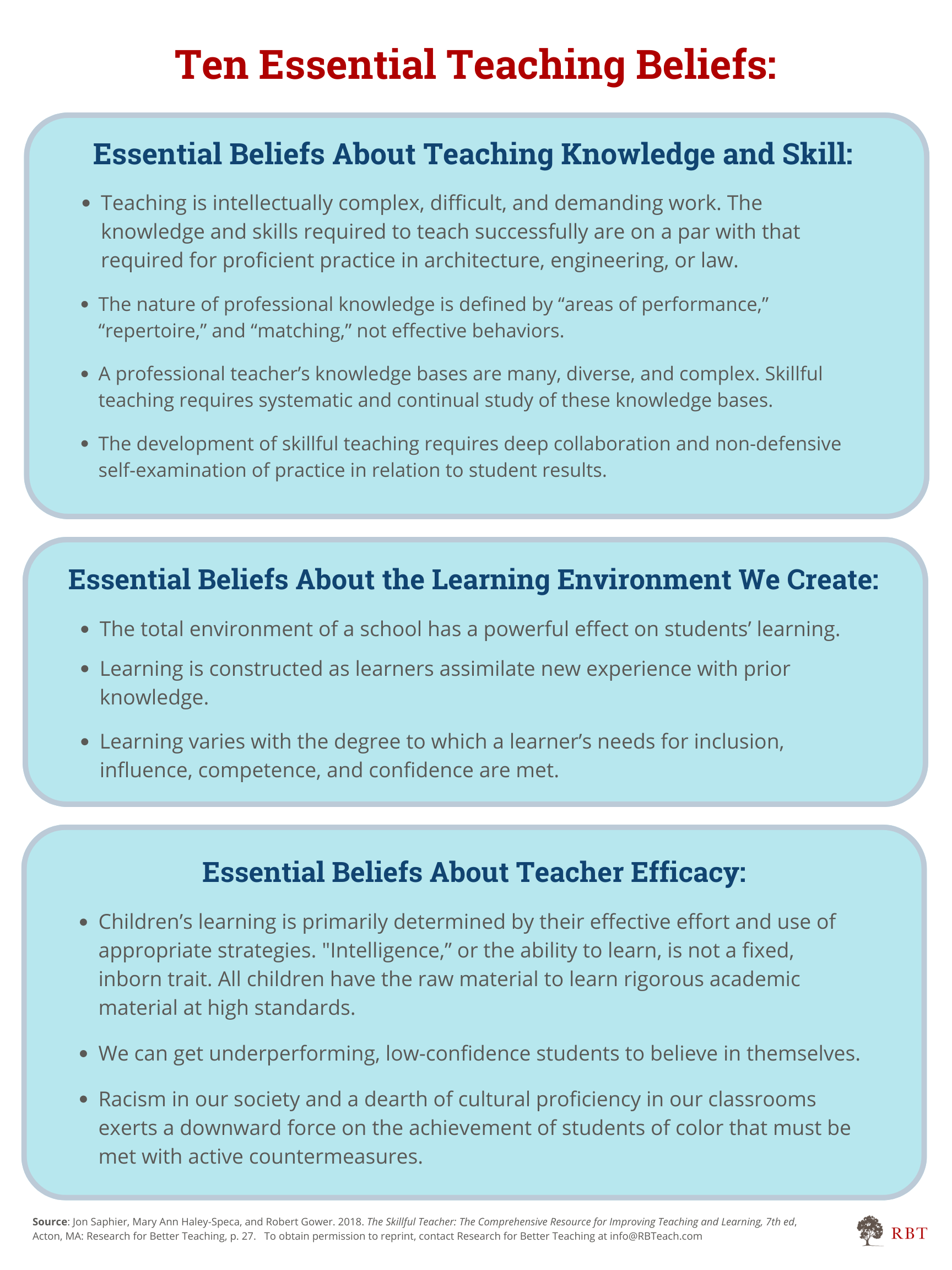
2026- 2027 School Year
2025-2026 School Year
Fall 2026 Newsletters
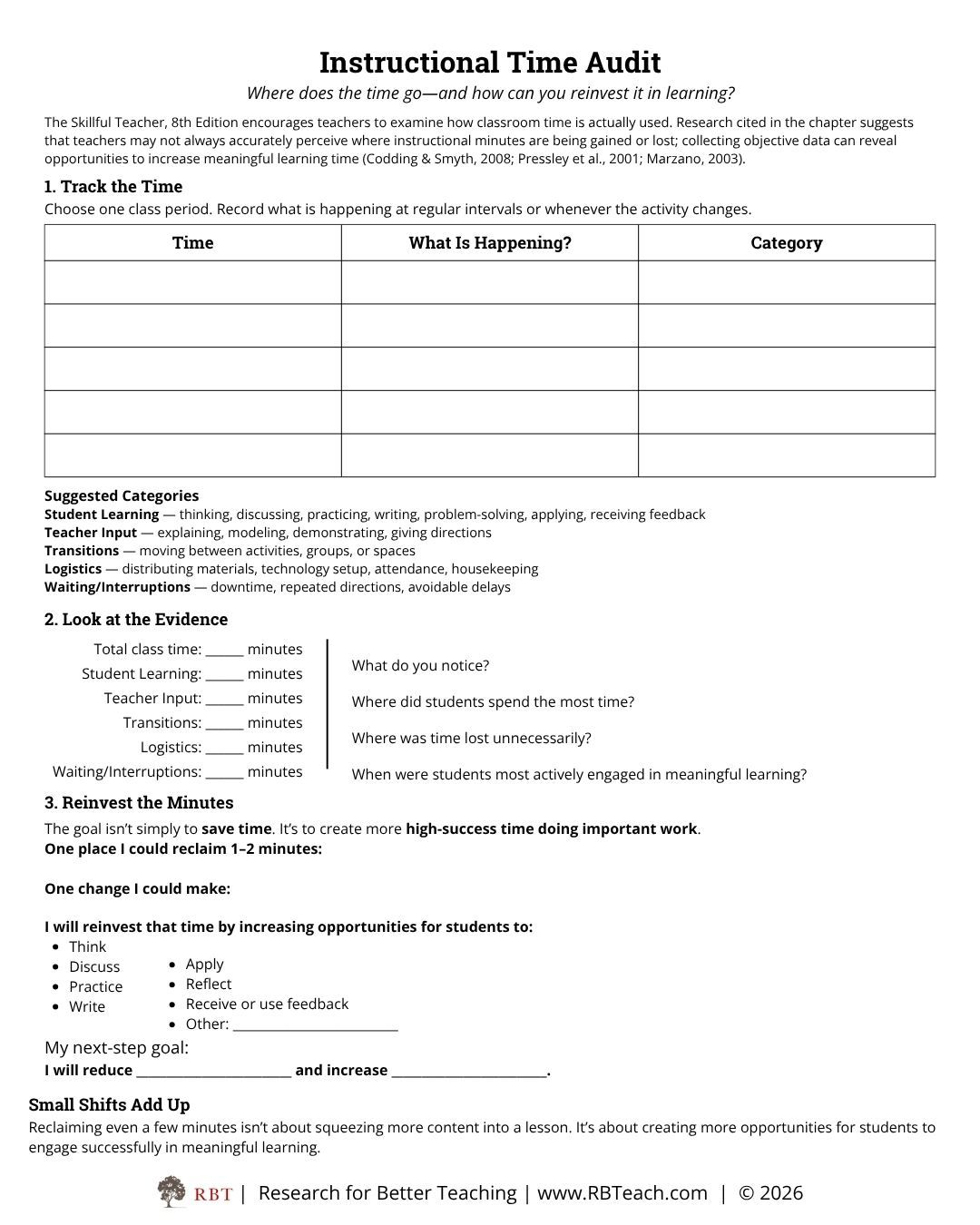
September 19 - Time
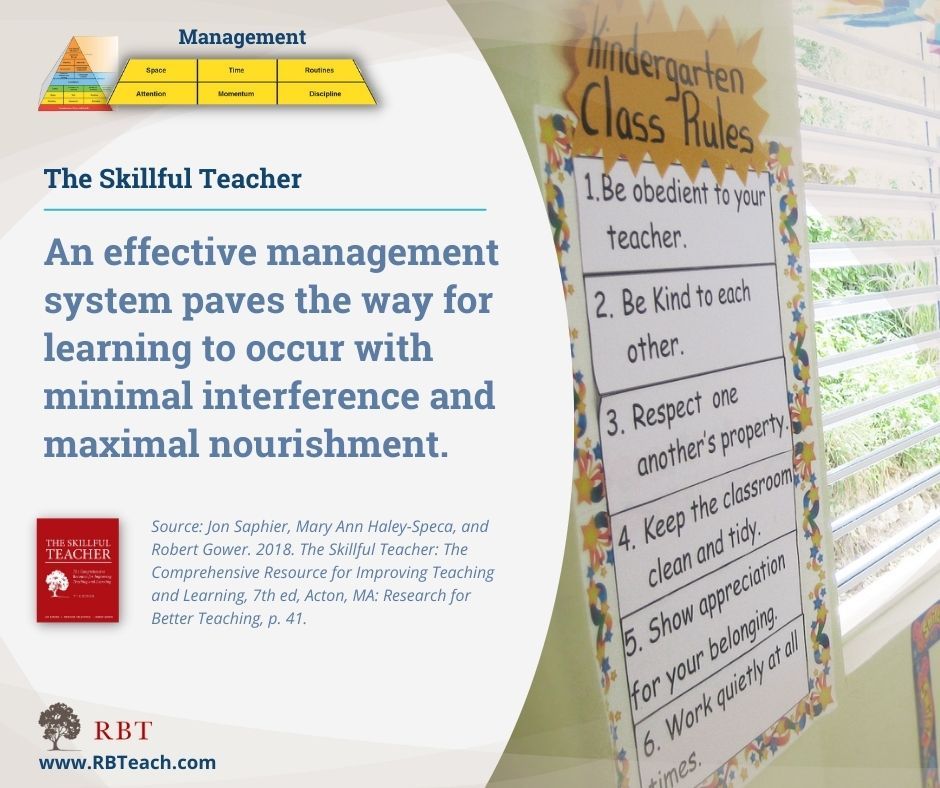
Time - Making Every Minute Count
How skillful teachers reduce lost time and create more opportunities for students to engage successfully in important work.
In our recent newsletters, we've explored how classroom spaces, routines, attention, and momentum create the conditions for learning. The next essential condition is one teachers can never replenish: time.
Every instructional minute is an opportunity for students to think, practice, discuss, and grow. Once it's lost to inefficient transitions, unclear directions, or unnecessary interruptions, it cannot be recovered. Skillful teachers recognize that protecting time isn't about moving faster—it's about making every minute count.
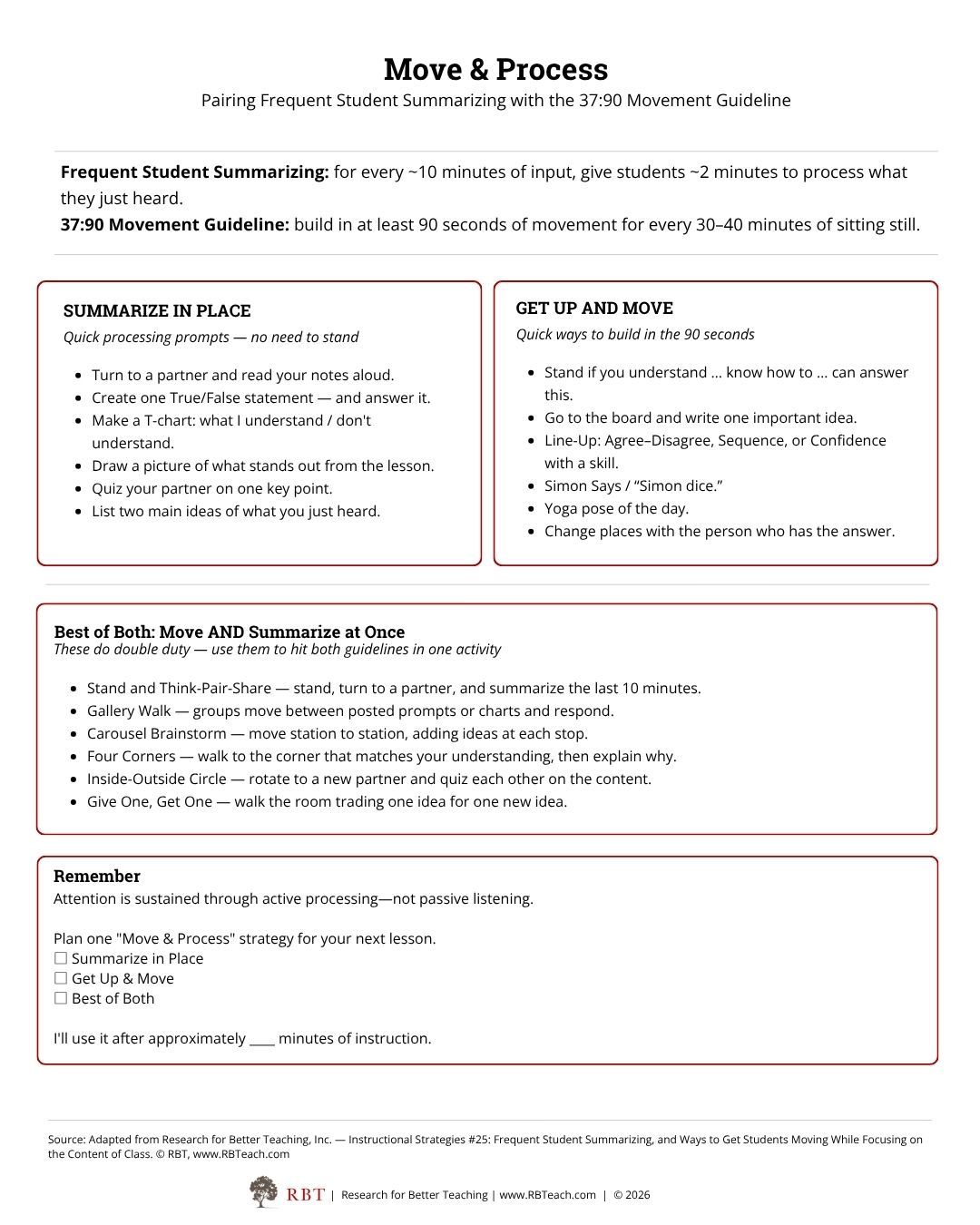
September 1 - Attention and Momentum
Keeping Minds Engaged and Learning Moving
Last year, we explored two essential ingredients of effective instruction: capturing students' attention and maintaining lesson momentum. If you'd like to revisit those ideas, you can find them here: Attention: The Gateway to Learning and Momentum: Keeping Learning on Track.
As a new school year gets underway, these two concepts become especially important. During the first few weeks, students are learning not only the curriculum, but also how learning happens in your classroom. Every transition, attention signal, and instructional routine either strengthens or weakens the flow of learning.
Now is the ideal time to establish habits that keep lessons moving, maximize instructional time, and help students stay focused from beginning to end.
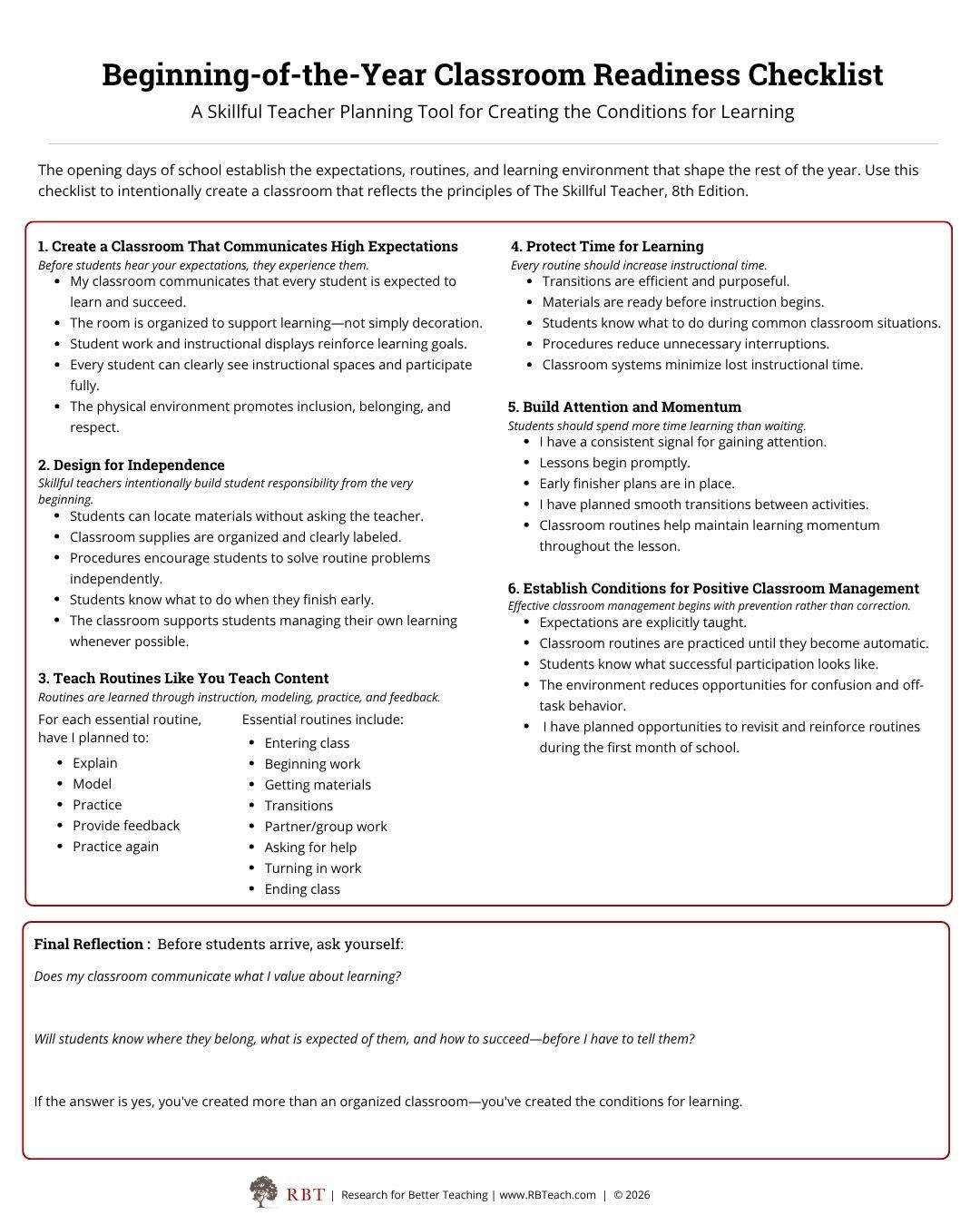
August 18 - Space and Routines
Your Classroom Teaches Before You Do
As a new school year begins, many teachers are busy arranging classrooms, organizing materials, and planning those important first days with students.
Last August, we explored how classroom space and well-established routines create the foundation for a successful year. When thoughtfully combined, classroom space and routines do more than support management—they create the conditions for learning.
Before students learn from our instruction, they learn from our environment.
From the moment they walk through the door, students begin answering important questions: Where do I belong? What is expected of me? How do things work here? The way a classroom is organized—and the routines that bring it to life—provide those answers long before the first lesson begins.
Thoughtfully designed spaces and intentionally taught routines help students feel confident, focused, and ready to engage from day one.
Spring 2026 Newsletters
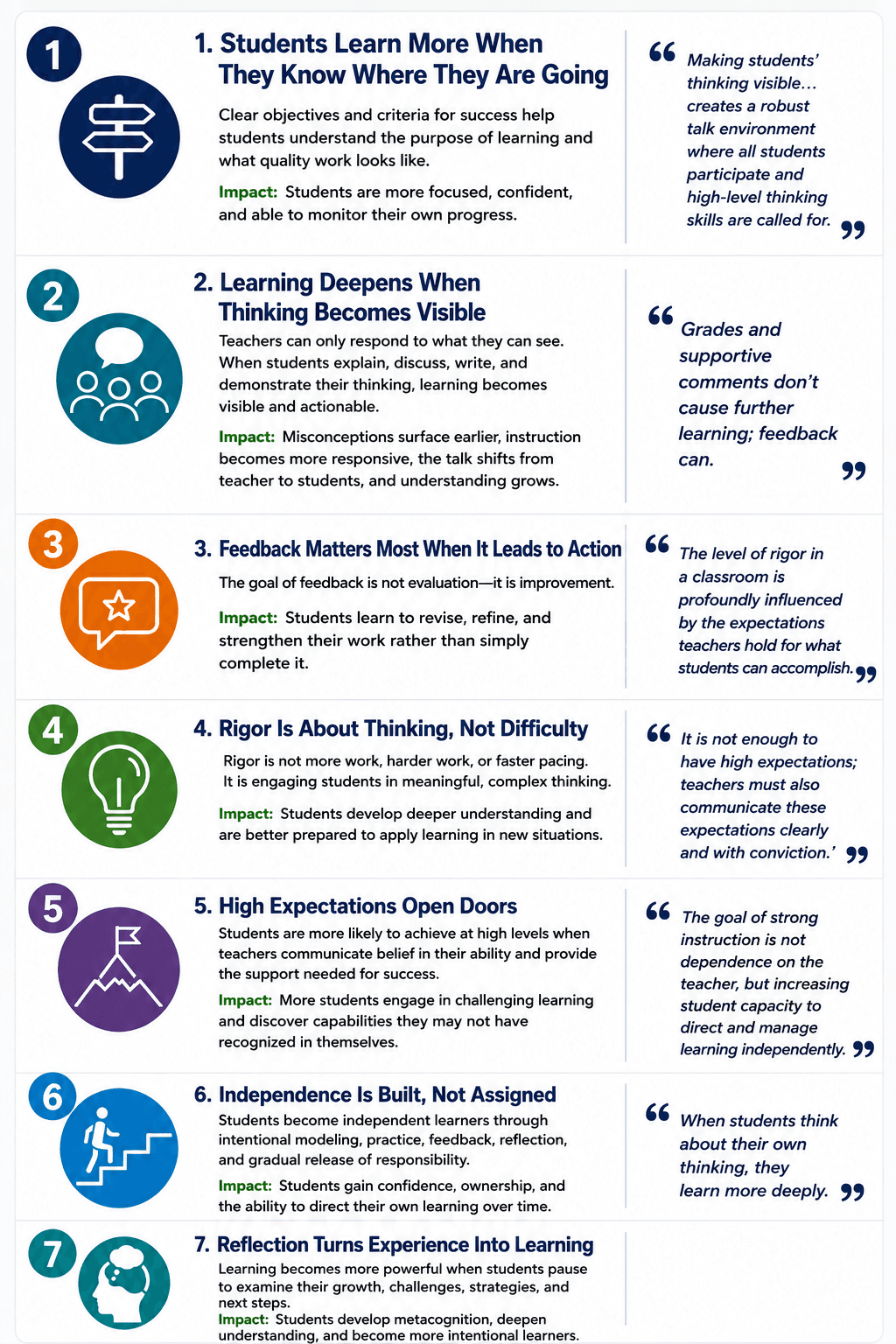
June 24 - Seven Enduring Lessons about Teaching and Learning
Looking Back. Looking Ahead.
What this year reminds us about helping students become capable, confident, and reflective learners.
As another school year comes to a close, many of us find ourselves reflecting on what students learned, how they grew, and what they will carry with them into the future.
While curriculum, standards, and content matter deeply, some of the most important outcomes of schooling extend beyond any single lesson, unit, or assessment.
We hope students leave our classrooms with confidence, curiosity, resilience, and the ability to continue learning independently.
Throughout this year, we've explored research-based practices that help create those outcomes—from establishing clear learning goals and making thinking visible to providing feedback, promoting rigor, building independence, and fostering reflection.
Taken together, these practices remind us of an important truth: great teaching is not simply about helping students learn today's lesson. It is about helping them become capable, confident, and reflective learners who are prepared for whatever comes next.
As we conclude this year's newsletter series, we invite you to reflect on seven enduring lessons about teaching and learning that continue to guide our work and shape student success.
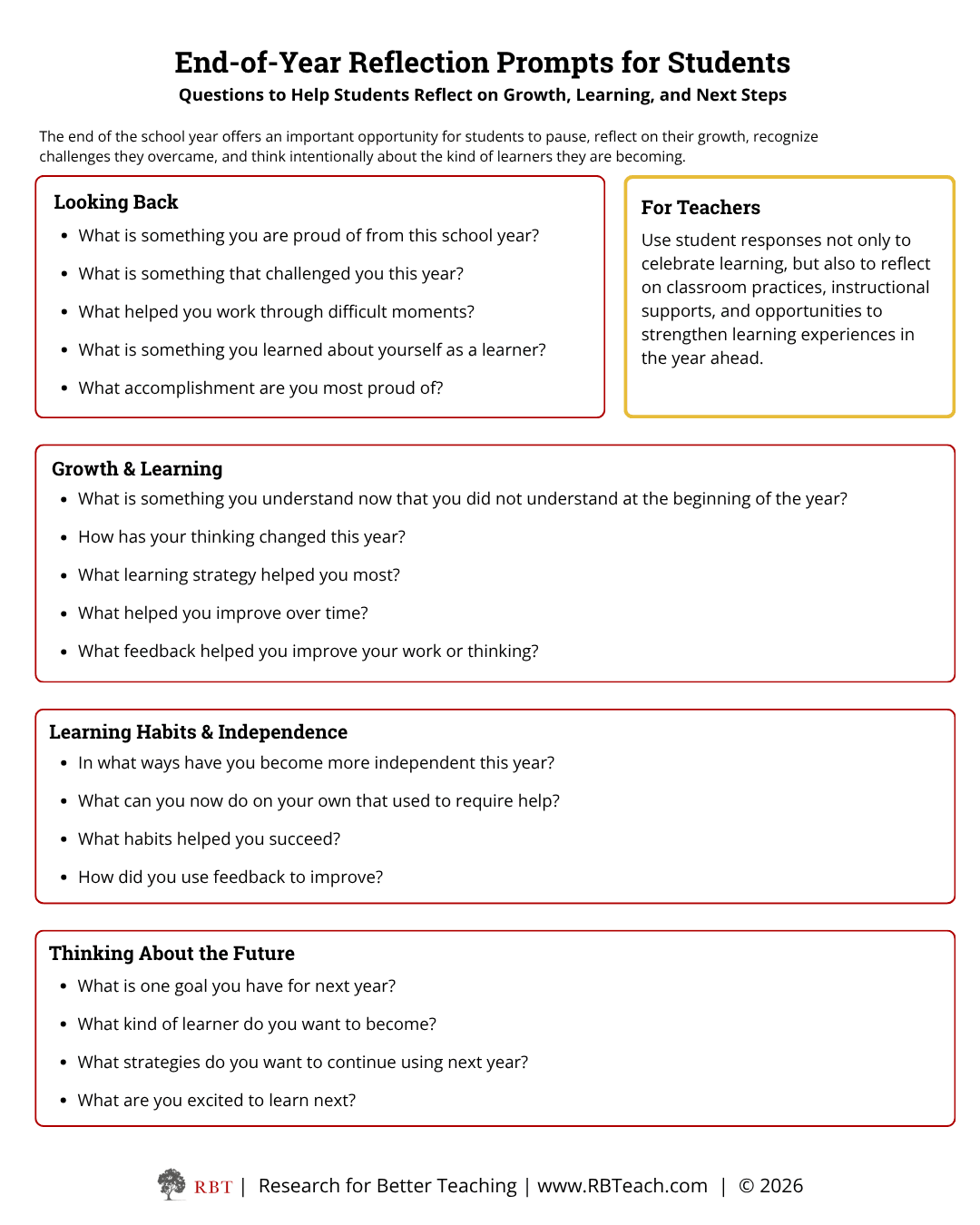
June 9 - Reflection & Self-Assessment
Helping students recognize growth, learning, and next steps
At the end of a school year, it can be tempting to focus only on what was covered, completed, or assessed.
But some of the most meaningful learning happens when students pause to think about their learning itself.
Reflection and self-assessment help students make sense of their experiences as learners:
- What helped them grow?
- What strategies were effective?
- What challenges stretched their thinking?
- What goals should they carry forward?
These moments help students connect learning across time rather than experiencing school as a series of disconnected assignments and activities.
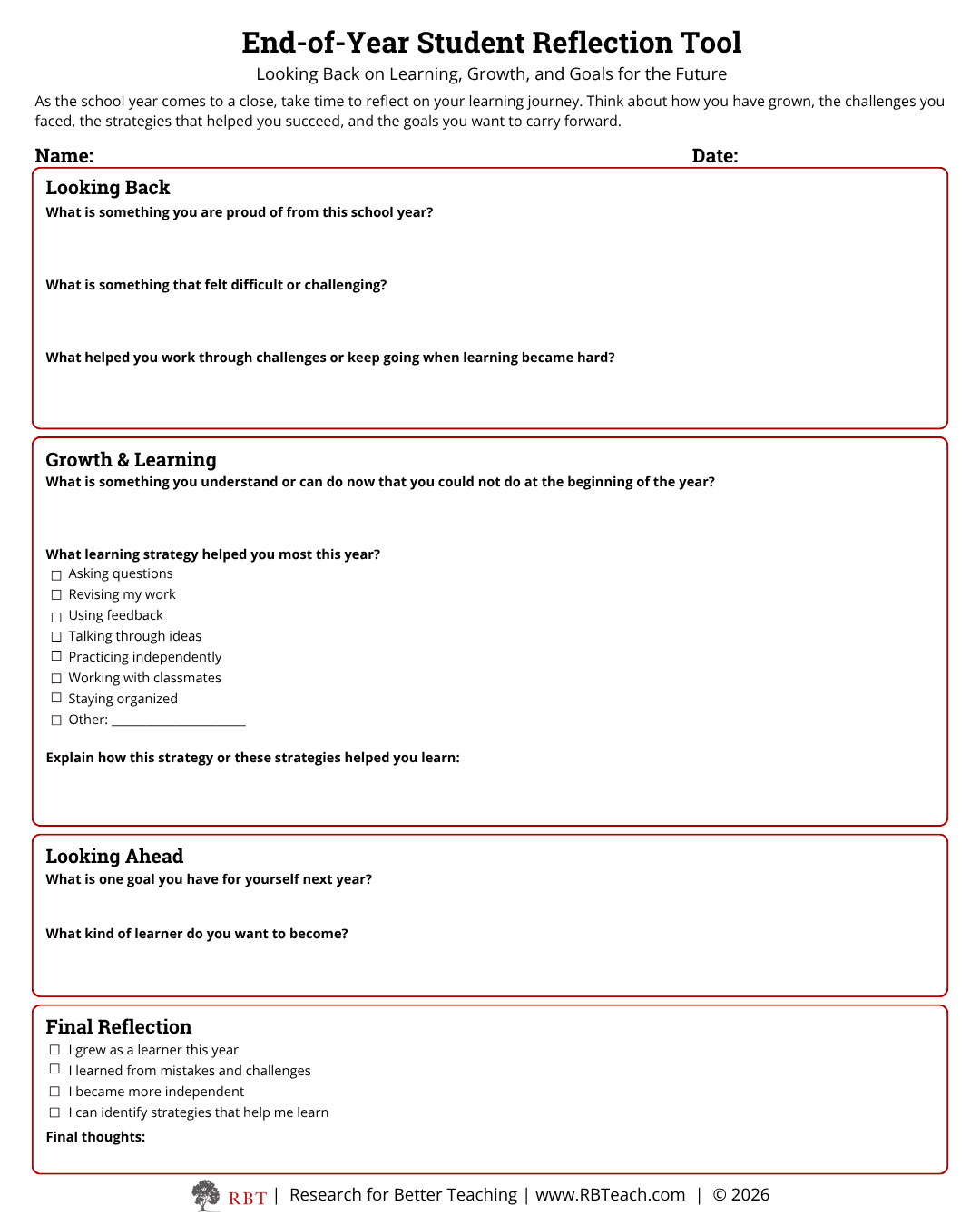
May 26 - Student Independence
Building classrooms where students can direct, monitor, and evaluate their own learning
Throughout this year, we’ve explored the instructional practices that help students learn with greater clarity, confidence, and purpose: clear objectives, criteria for success, modeling, formative assessment, feedback, visible thinking, planning, and rigor.
Each of these practices supports an important long-term goal: helping students take increasing ownership of their thinking, learning, and growth over time.
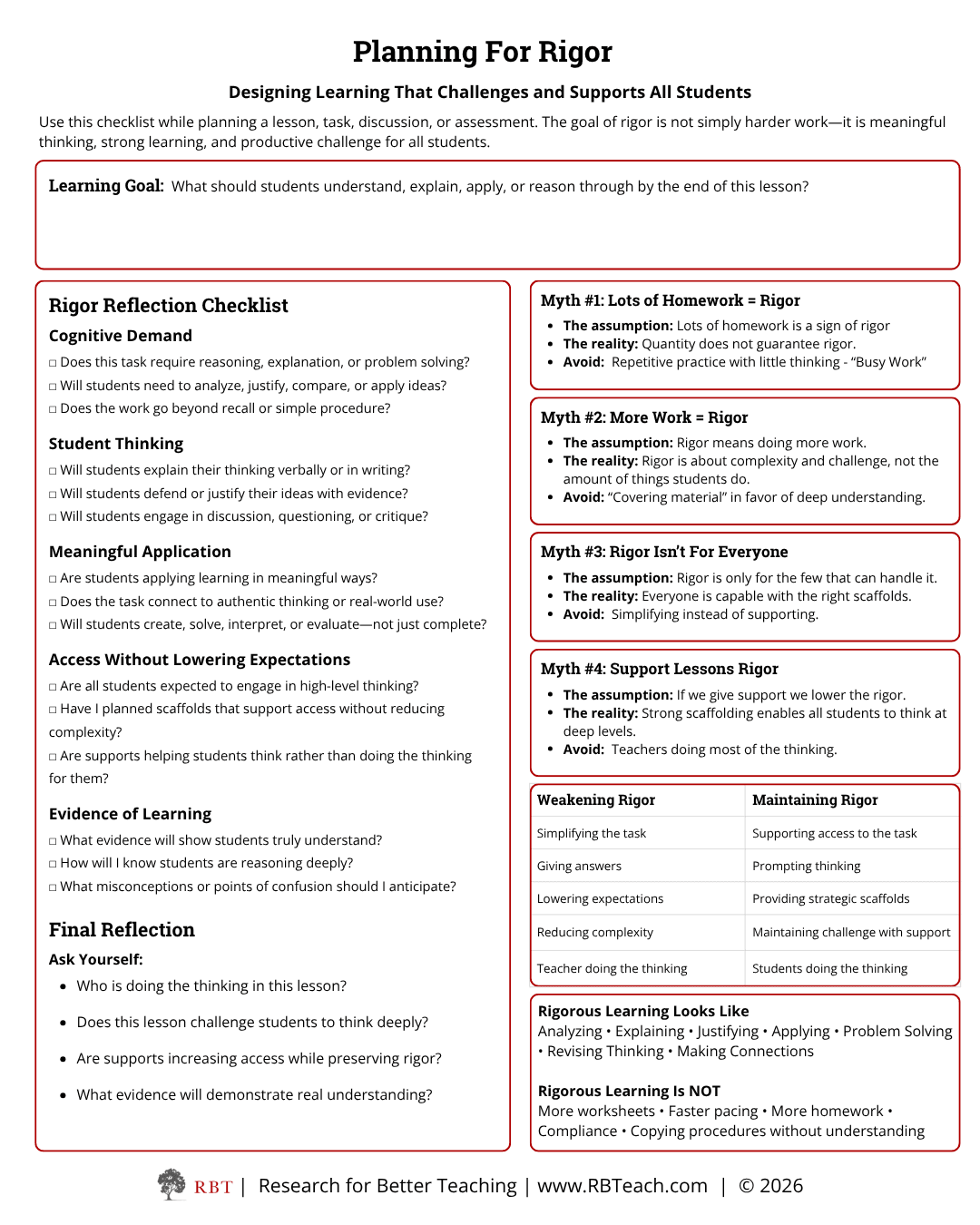
May 12 - Rigor: Challenging Thinking for Every Student
In our last edition, we explored how strong planning creates the conditions for meaningful learning—aligning objectives, tasks, and evidence of understanding so lessons are intentionally designed for student thinking.
But effective planning is not just about having a plan—it’s about ensuring that what we plan challenges students to think deeply, engage meaningfully, and develop the kinds of understanding and problem-solving skills they need beyond the classroom.
This edition focuses on rigor—not as harder work, more work, or faster pacing, but as learning experiences that require students to think deeply, reason, explain, and apply understanding in meaningful ways.
April 28 - Strong Planning, Strong Teaching
Strong Planning, Strong Teaching
Strong teaching isn't improvised - it's designed.
In recent issues, we’ve focused on what happens during instruction—modeling, formative assessment, feedback, and making student thinking visible.
But there’s a critical truth behind all of those moves: They only work when they are planned.
Strong teaching isn’t improvised—it’s designed.

April 14 - Making Student Thinking Visible
Who's Doing the Talking?: Why student thinking—not teacher talk—drives learning
In recent issues, we’ve focused on the practices that bring clarity and precision to instruction—clear objectives, criteria for success, modeling, formative assessment, and feedback.
Each of these depends on one essential condition: We have to be able to see student thinking.
When thinking remains hidden, we are left to guess what students understand, where they are confused, and what they need next.
Making student thinking visible is what allows these practices to work together—turning instruction into something responsive, targeted, and effective.
It is the bridge between teaching and learning
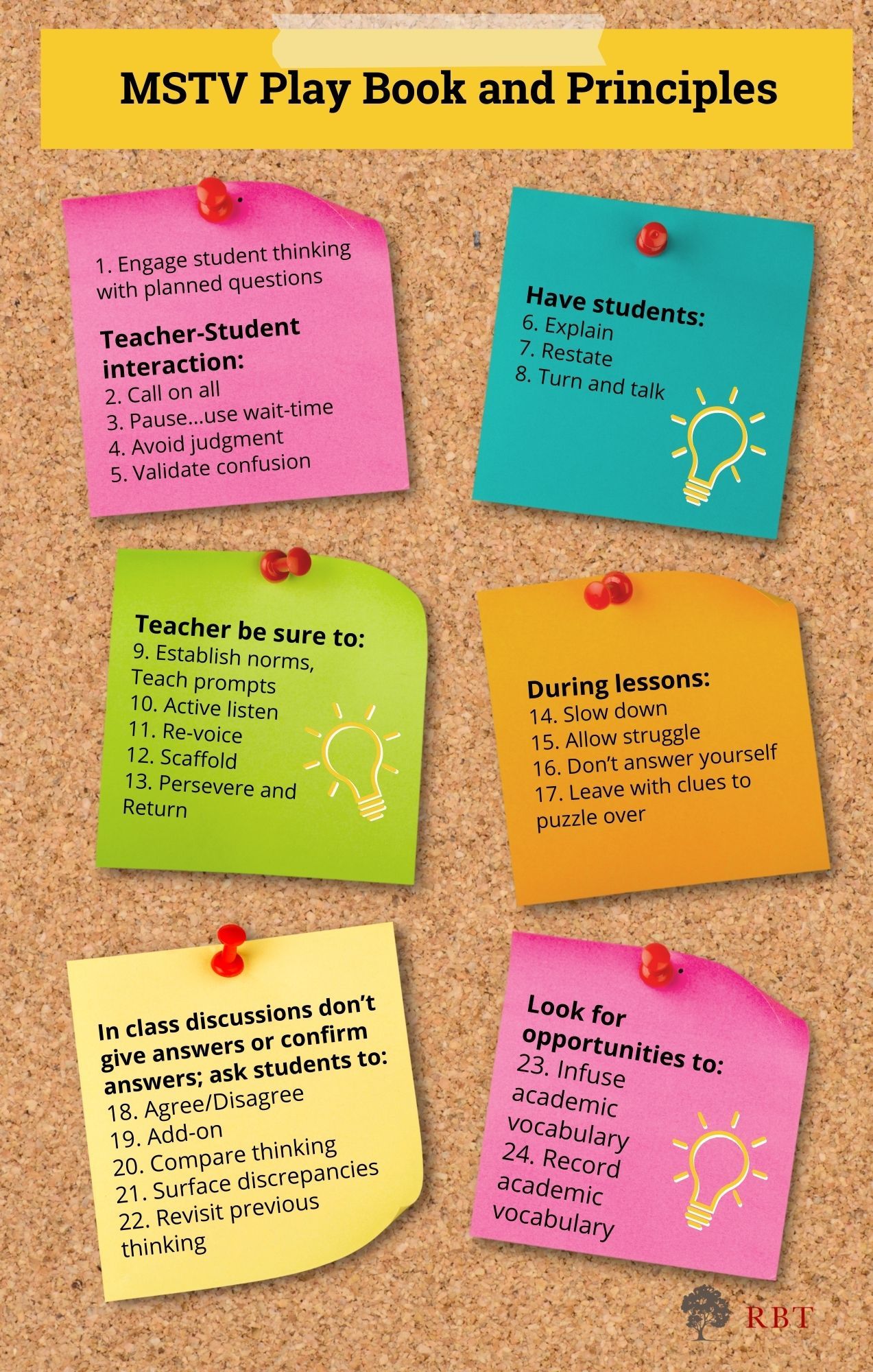
Feedback (March 31)
Feedback That Moves Learning Forward: Turning Evidence Into Action Through Skillful Feedback
Clear instruction doesn’t happen by chance—it’s built through intentional practices.
Skillful teachers are made, not born.
We develop our craft through the consistent use of strategies such as strong objectives, visible criteria for success, modeling thinking, and formative assessment that reveals learning as it unfolds.
But even when teachers are gathering evidence of student understanding, one essential question remains: What do we do with what we see?
This is where feedback becomes the move that matters most.
Formative Assessment (March 17)
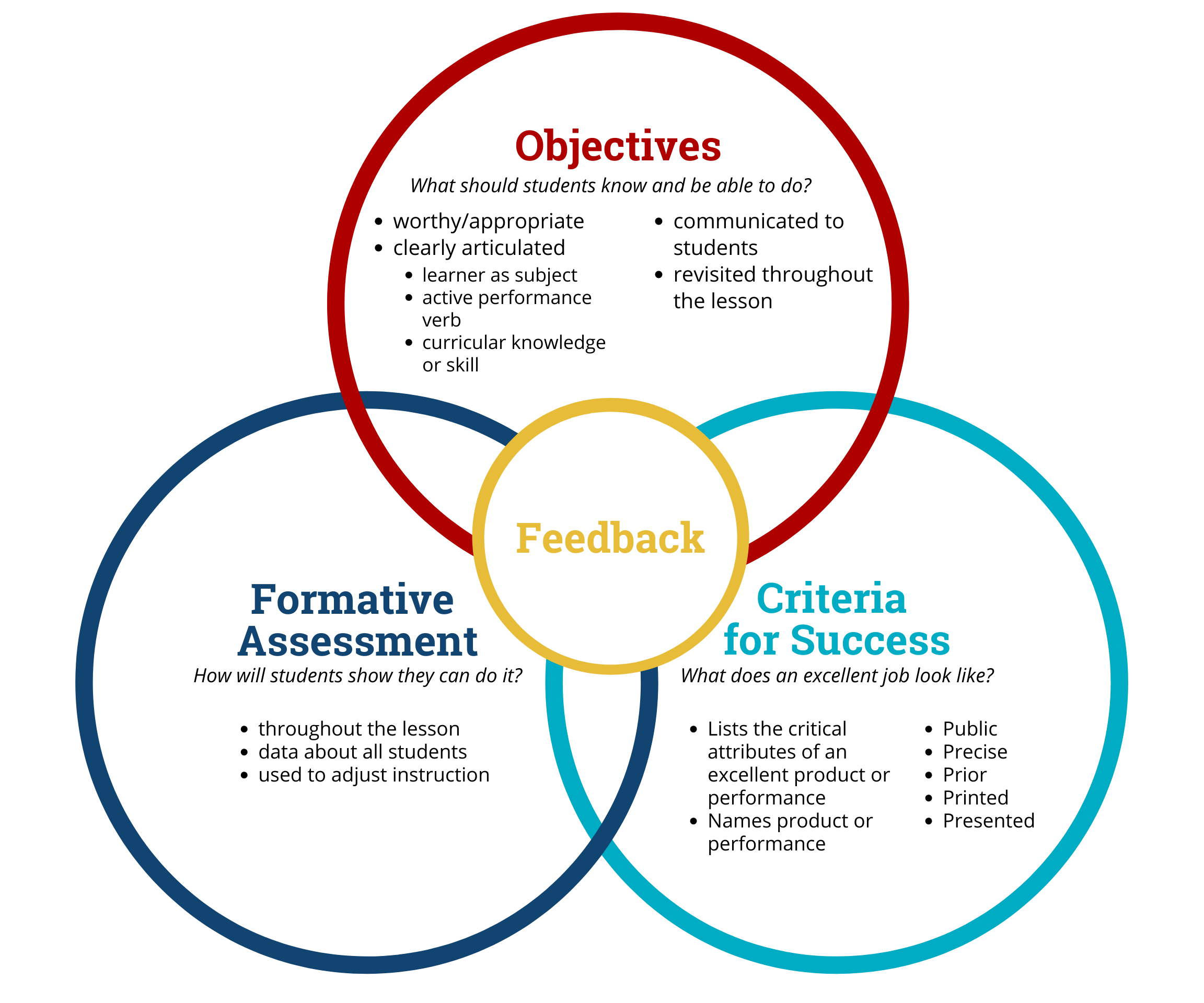
Formative Assessment: See Learning While It is Happening
In recent editions, we’ve focused on practices that bring clarity to instruction—writing strong objectives, making criteria for success visible, and modeling the thinking and processes students need to succeed.
Formative assessment builds on these foundations.
Even when goals are clear and expectations are visible, teachers still need to answer an essential question:
What are students understanding while learning is happening?
Modeling (March 3)
Moves That Build Clarity, Confidence, and Independence
In recent editions, we’ve focused on clarity—setting strong objectives and making criteria for success visible. When students know where they’re headed and what quality looks like, learning becomes more attainable.
But even when expectations are clear, students can still struggle. They may see a strong example and think, “I understand what this should look like… but I don’t know how to get there.” They can imitate the steps—yet remain unsure how to think their way through the work.
In this issue, we explore the difference between modeling and modeling thinking aloud—and why both are essential for building not just clarity, but confidence and independence.
Success Starts with Clarity (February 3, 2026)
Empowering Every Learning with Visible, Actionable Criteria for Success
In recent editions, we’ve focused on writing clear learning objectives—what students are learning and why it matters. But even a strong objective isn’t enough if students don’t know what success looks like.
Criteria for success translate objectives into something students can see, understand, and use. When quality is explicit, students are more likely to persist, self-monitor, revise, and take ownership of their learning. When it isn’t, expectations remain hidden—and inequities grow.

Clear Objectives, Clear Thinking for Students (January 26, 2026)
The start of a new calendar year is a powerful time to reset—not just routines, but also student focus and instructional clarity.
By January, students have settled into classroom norms, but engagement may waver, and learning goals can start to feel unclear or disconnected. That’s why this is the perfect moment to return to one of the most foundational tools of high-expertise teaching: clear learning objectives.
In this edition, we’ll explore how to bring objectives to life—not as bullet points on a slide, but as guiding lights for student learning.

Belief Gaps Hold Students Back—Let’s Change That (January 6, 2026)
This week, we turn the lens toward students themselves.
Many low-performing, low-confidence students don’t believe they “have it.” They see ability as fixed and failure as proof they’re not smart enough. The result? They hold back on effort—because effort feels risky when you’re unsure you can succeed. This edition of Teaching and Leading with Intention focuses on one of the most impactful responsibilities of a skillful teacher: changing what students believe about themselves. It’s not enough for teachers to believe in their students—students need to believe in themselves. That takes deliberate work.

2025 Fall Newsletters
The 12 Days of Skillful Teaching (December 23,2025)
Instead of our usual newsletter, we’re bringing you a playful holiday countdown—full of skillful moves worth carrying into the new year.

From Belief to Practice - High Expectations in Every Move (December 9, 2025)
This Edition is About Beliefs—The Foundation Beneath Every Move We Make
Every action in the classroom flows from belief. When teachers deeply believe that all students can learn at high levels—with effort, support, and time—it changes how they teach, what they expect, and how students respond. In this issue, we go upstream—before the lesson plans, the pacing guides, the instructional moves—and ask: What do you believe about your students?

High Expectations—A Daily Practice of Equity (November 25, 2025)
In this issue, we turn our attention to one of the most powerful and often overlooked equity tools: high expectations teaching.
Every day, in every classroom, students are receiving messages about what their teachers believe they can do. This edition focuses on how those messages—both spoken and unspoken—shape student identity, motivation, and achievement. Drawing from The Skillful Teacher we unpack how expectations show up in classroom practice and how teachers and leaders can ensure those expectations promote equity, not perpetuate bias. From feedback and questioning to grouping and pacing, we’ll look at the subtle but powerful ways teachers communicate belief—and how those messages can unlock potential for every learner.

Discipline - Finding the “Why” Before the “What” (November 11, 2025)
Discipline challenges rarely begin with defiance. More often, they stem from confusion, unmet needs, unclear expectations, or a lack of connection. When teachers take time to diagnose the root causes of behavior—rather than reacting to what’s visible—they move from managing misbehavior to truly teaching self-regulation and responsibility.
In this issue, we’ll explore how skillful teachers use curiosity, reflection, and observation to uncover what’s really driving student behavior. By understanding the why, we can respond with strategies that teach, restore, and build trust instead of control.

Discipline - Teaching it, Not just managing for it (October 28, 2025)
This edition is all about Discipline—Teaching it, Not just managing for it
Discipline isn’t just about stopping misbehavior—it’s about teaching students how to be part of a safe, respectful, and productive learning community. In this issue, we’ll explore how clear expectations, calm responses, and respectful consequences help build classroom environments grounded in dignity and trust.

Time- making every minute count (October 14, 2025)
This edition is all about Time—making every minute count.
Time is one of a teacher’s most powerful tools—and one of the easiest to lose. In this issue, we’ll explore how thoughtful planning, clear expectations, and efficient routines help teachers protect instructional time and maximize learning. You’ll see how small shifts—like tightening transitions or anticipating needs—can reclaim valuable minutes. Instructional leaders will find practical ways to support teachers in using time intentionally through coaching, scheduling, and collaborative reflection.

Momentum —one intentional move at a time. (September 30, 2025)
This edition is all about Momentum—keeping learning on track.
Momentum is what helps classrooms feel alive, focused, and purposeful. In this issue, we’ll explore how pacing, transitions, and clear next steps help students stay engaged and instruction flow smoothly. You’ll see how small teacher moves can minimize downtime, reduce disruptions, and keep the energy moving toward learning goals. Instructional leaders will find practical ways to support momentum through observation and feedback conversations.

Cultivating Attention: The First Move of Skillful Teaching (September 16, 2025)
In this edition, we turn our focus to Attention—the gateway to all learning.
You’ll explore five categories of attention moves that help teachers proactively manage focus, redirect off-task behavior, and spark engagement. From subtle signals to powerful moments of connection, these strategies help create classrooms where students are mentally present and ready to learn. Instructional leaders will find practical ways to observe and support teachers in developing strong attention routines.

Routines That Teach: Reducing Chaos and Maximizing Learning (September 2, 2025)
In this edition, we explore how to build, teach, and revisit Routines that promote independence, consistency, and engagement—and how instructional leaders can support this work through observation and feedback.
Learning Space That Works for Everyone (August 19, 2025)
We’re starting with Space—how the physical layout of your classroom communicates expectations, supports instructional goals, and creates access and belonging for every student.

February 2025
February Topics Include:

2024 Newsletters
October 2024
October Topics Include:
- Blog: Opinion: The MCAS Debate
- Open Enrollment Programs

August 2024
August Topics Include:

June 2024
June Topics Include:

February 2024
February Topics Include:

2023 Newsletters
December 2023
December Topics Include:
- Blog: The Gift of High Expectations Teaching
- Jon Saphier's Kappan Article: A New North Star
- Open Enrollment Courses

October 2023

August 2023
June 2023
June topics include:
- Instructional Corner: Blog Post: Making Use of the Third Turn in Teacher Talk by Evelyn Ford-Connors
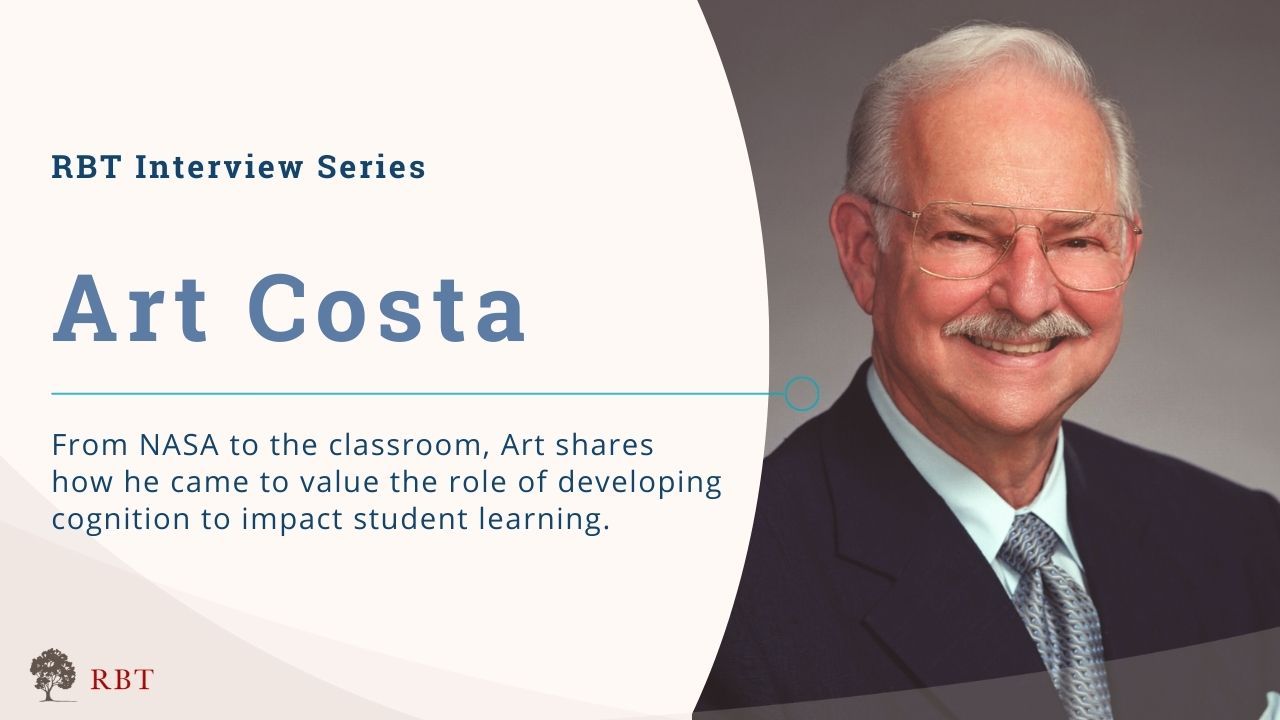
- Interview: Jon Saphier and Mary Ann Haley Speca Interview Art Costa
- Submit a sample for a chance to be featured in the 8th edition of The Skillful Teacher here
- Open courses
May 2023
May topics include:
April 2023
April topics include:
- Instructional Corner: Blog Post: Essential Elements of of a Well-Structured Lesson
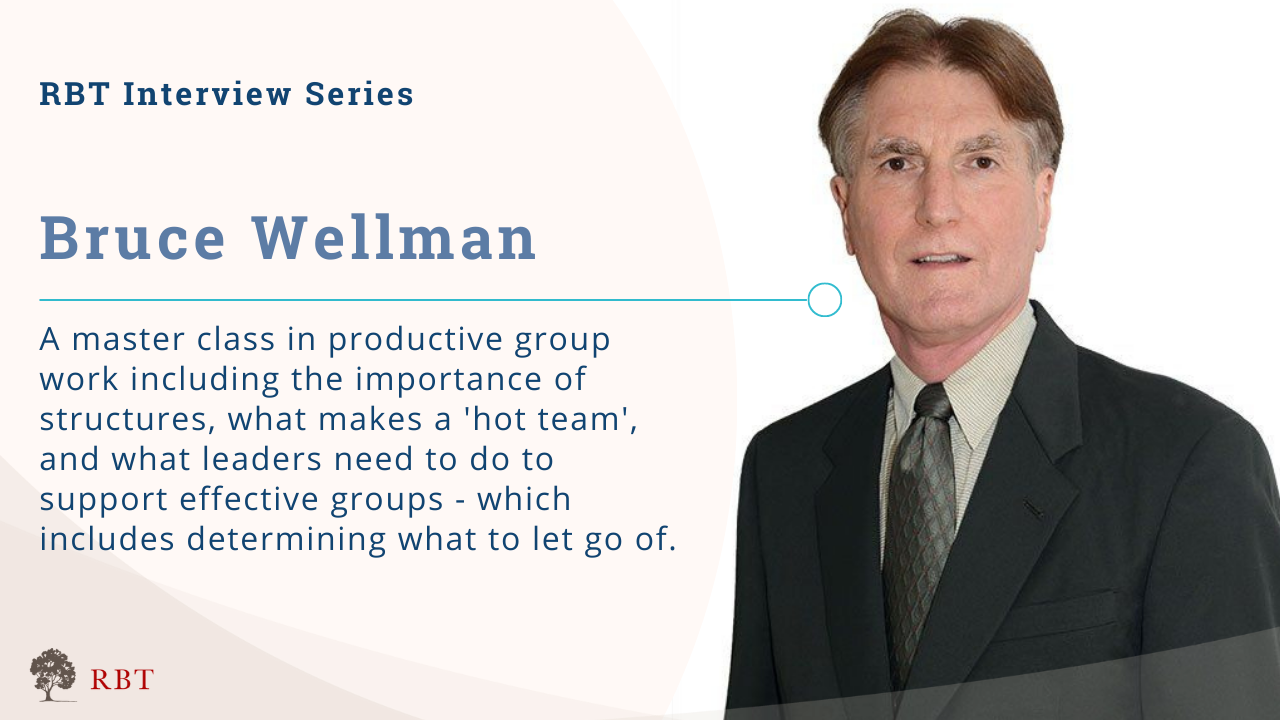
- Interview: Jon Saphier interviews Bruce Wellman
- Open courses
March 2023
March topics include:
- Instructional Corner: Blog Post: The Many Job Functions of a Skillful Teacher
- Leadership Corner: Blog Post: What Instructional Leaders Must Know and Be Able to Do (an excerpt from Jon Saphier's forthcoming book)
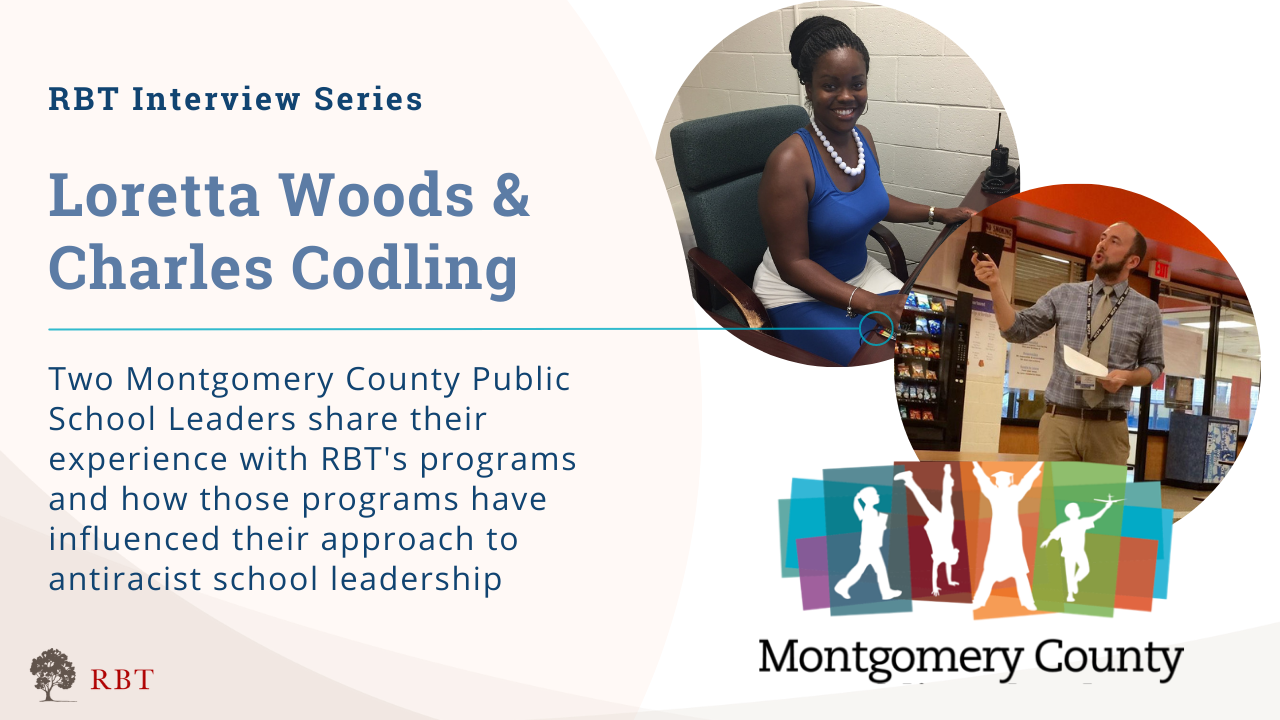
- Interview: Jon Saphier and Sue McGregor interviews Montgomery County Public School leaders Loretta Woods and Charles Codling
- Open courses
February 2023
February topics include:
January 2023
January topics include:
- A review of the Top Blogs
- Most Viewed Videos
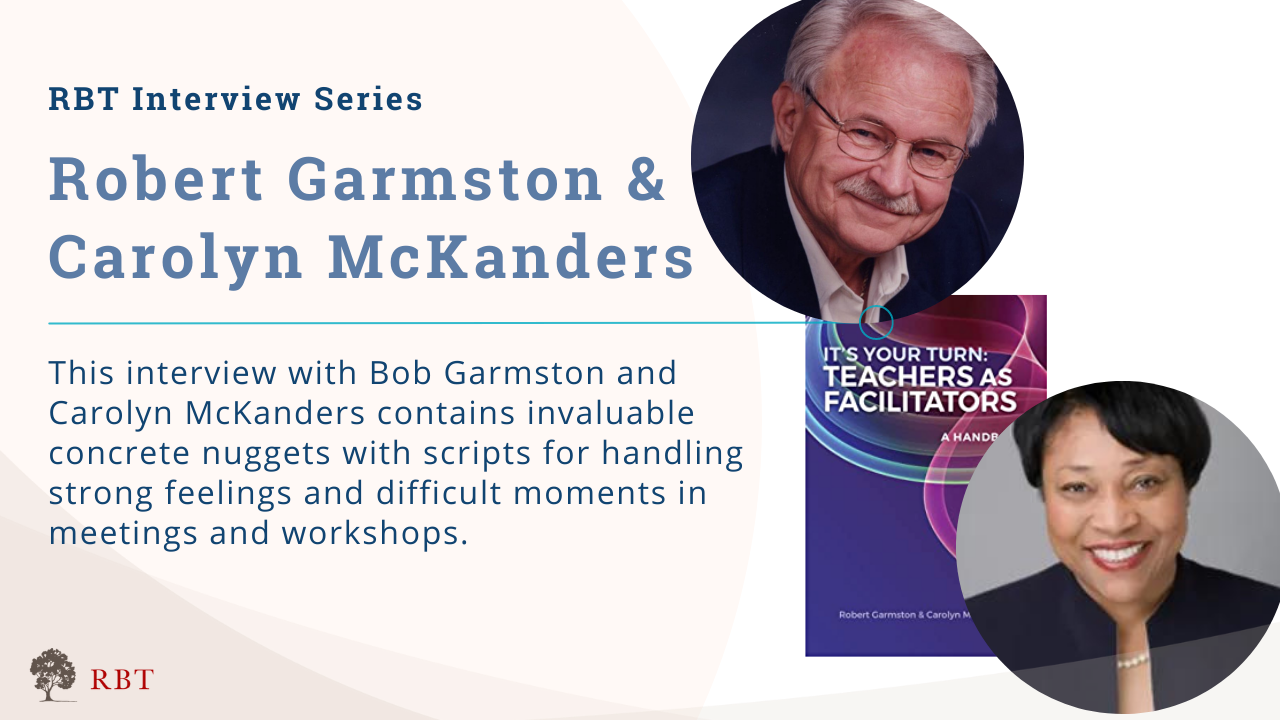
- Interview: Robert Garmston and Carolyn McKanders - Calling People In, Not Out
- Skillful Teacher Video Contest
- Open courses
2022 Newsletters
December 2022
December topics include:
- Instructional Corner: Blog Post: The Power of Student Goal Setting
- Leadership Corner: Blog Post: The Courage to Lead (an excerpt from Jon Saphier's forthcoming book)
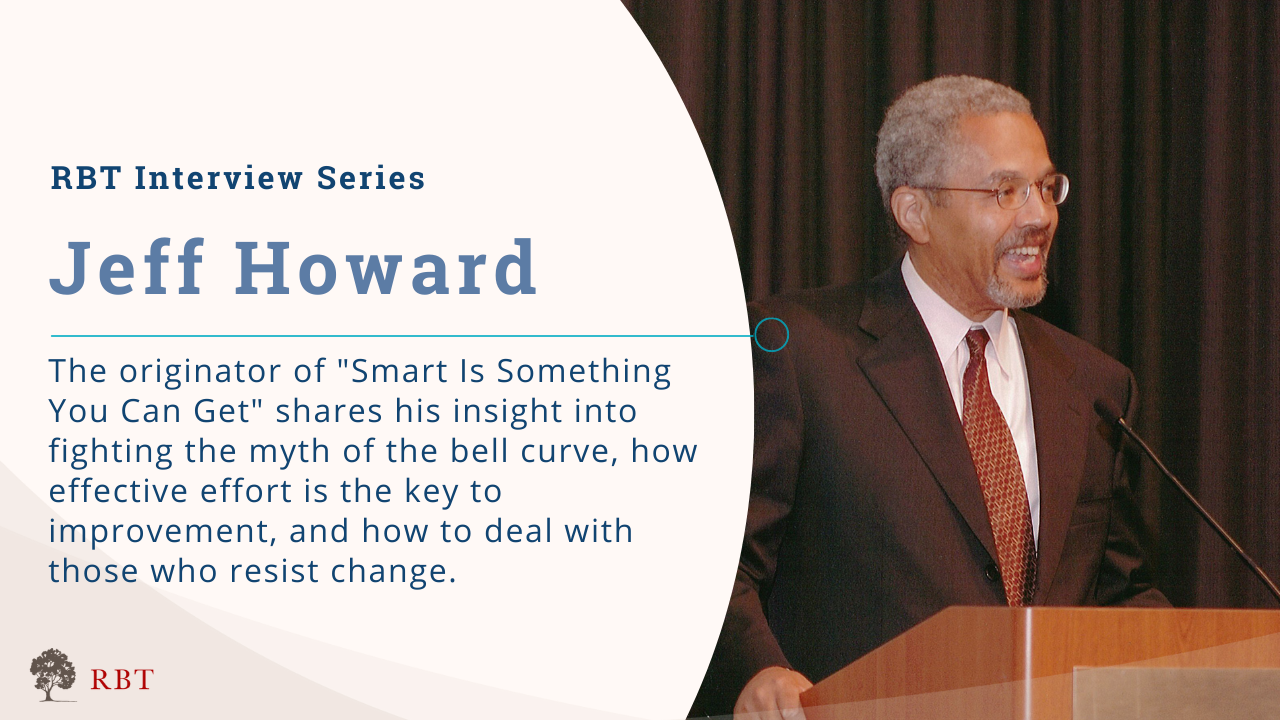
- Interview: Jon Saphier interviews Jeff Howard of the Efficacy Institute
- Open courses:
- SST
November 2022
November topics include:
- Instructional Corner: Blog Post: The Collaborative Power of Teacher Teams
- Leadership Corner: Blog Post: To See the Should of a School, Look at Common Planning Time (an excerpt from Jon Saphier's forthcoming book)
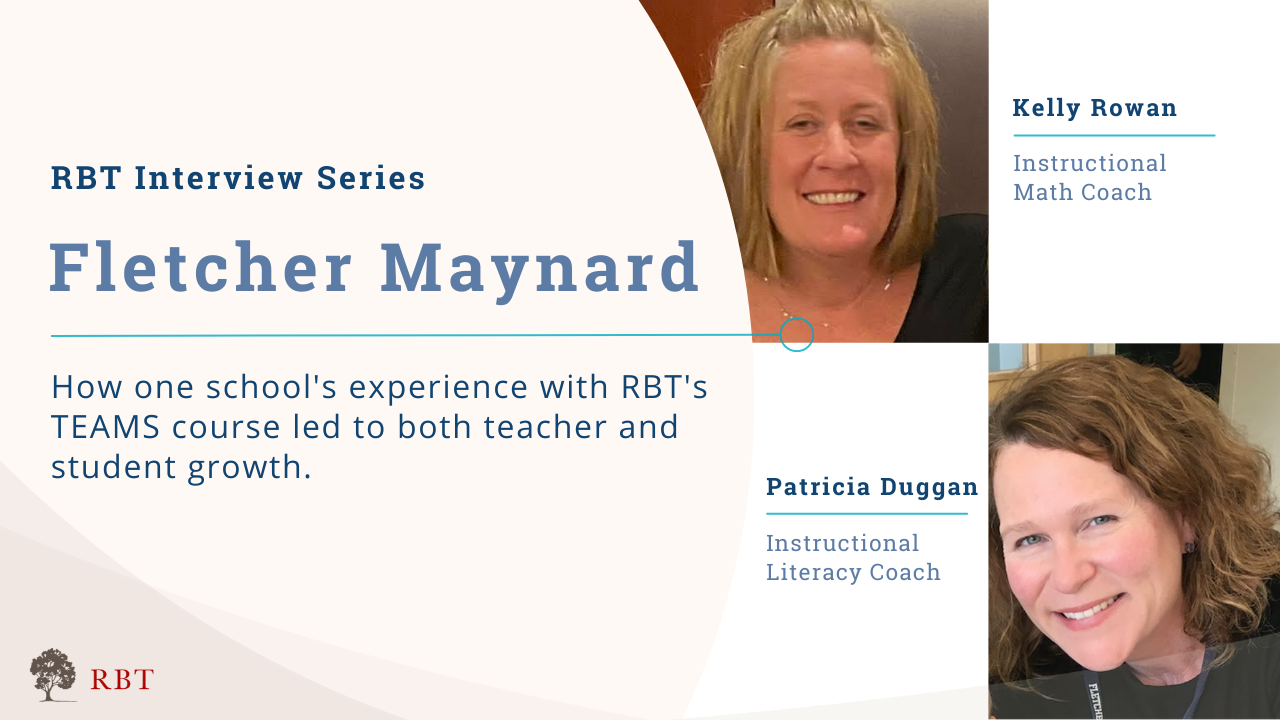
- Interview: RBT's Reena Freedman interviews Instructional Coaches Kelly Rowan and Patricia Dugan on their experience with implementing RBT's High Impact Teacher Teams course.
- Open courses:
- ATSR
- SST
October 2022
October topics include:
- Instructional Corner: Blog Post on The Many Job Functions of Skillful Teachers
- Leadership Corner: Blog Post on Where to Show Up and What to Do (an excerpt from Jon Saphier's forthcoming book)
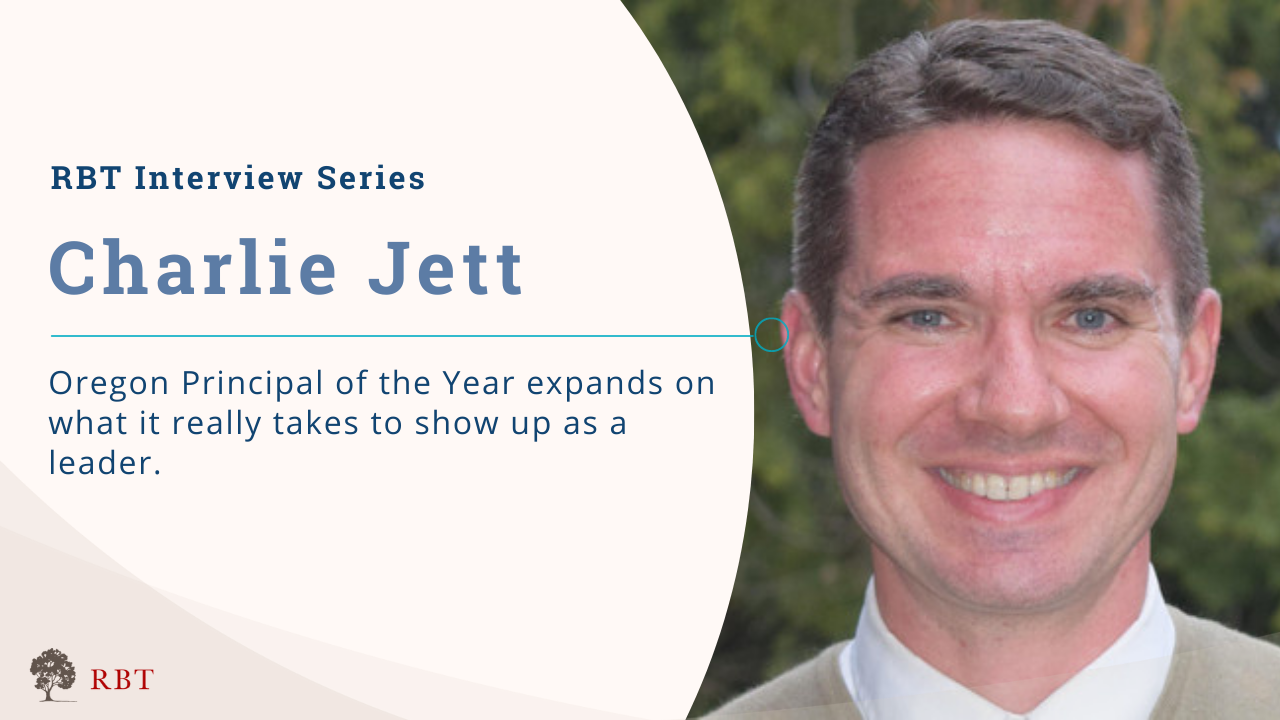
- Interview: Jon Saphier interviews Oregon Principal of the Year Charlie Jett
September 2022
September topics include:
- Instructional Corner: Blog Post on Personal Relationship Building
- Leadership Corner: Blog Post on Adult Professional Culture (an excerpt from Jon Saphier's forthcoming book)
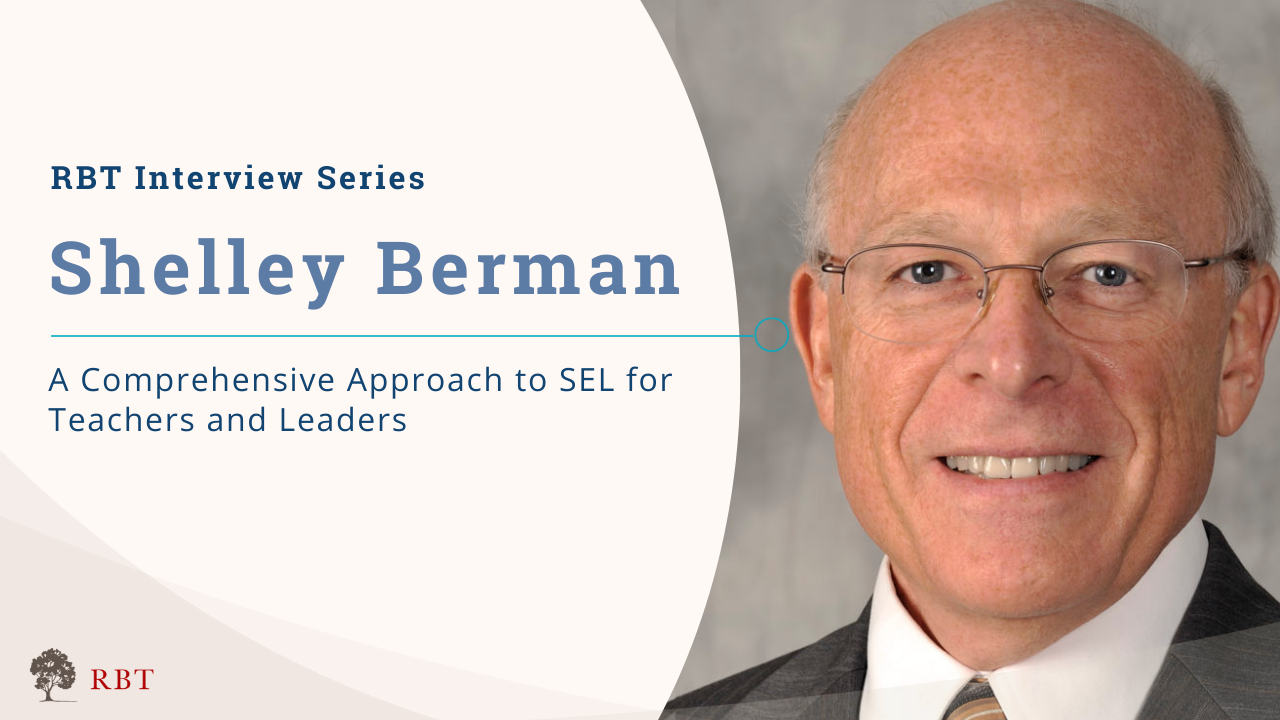
- Interview: Jon Saphier interviews SEL pioneer Shelley Berman
August 2022
August topics include:
- Blog post: New Year: Start at the beginning
- What #SkillfulTeachers and #SkillfulLeaders know and do